
Learning from the Wellbeing Grant pilot project: October 2023 – September 2025
Background
This work began in December 2022, making small, one-off grants (total value £19,500) to support colleagues and organisations closest to the initial impact of the cost of living crisis. Feedback from this period led to wellbeing grants featuring for a further two years.
This article summarises what we did and what we’ve learnt.
Goals
As well as supporting colleague and organisational wellbeing, the wellbeing grant goals were:
- To encourage a culture of wellbeing, in charitable organisations and the VCFSE sector;
- To equip organisations with the experience and confidence to incorporate wellbeing more intentionally into their future plans;
- To demonstrate to funders (either directly or via the funded organisations) that funding can, and should be, specifically funded.
Delivery
From 1st October 2023, we made a separate, restricted, wellbeing grant alongside each main grant, calculated at 5% of the total value of the grant, capped at £5,000. This could be spent on the wellbeing activity of the organisations’ choosing, although examples were provided. The grant was paid at the same time as the first main grant instalment and could be used at any time throughout the funding period.
This resulted in 28 grants being made, with a total value of £101,719.
Findings
All recipients of a wellbeing grant were asked to complete a simple feedback form, asking how they used the grant, and what difference it made to their team and their organisation.
How the grants were used
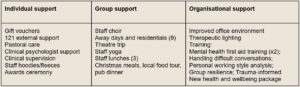
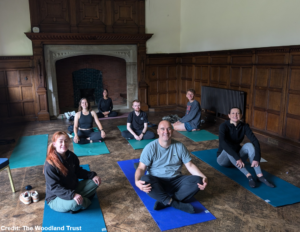
Grants were applied to a wide variety of needs, but it was clear that people wanted to spend time together: to eat, experience new things and new places together, especially with colleagues they usually spent less time with.
The difference the wellbeing activity made
In terms of outcomes, improved morale was widely cited, evidenced by staff surveys, as well as a greater sense of connection.
“Colleagues feel more connected to other departments, and Line Managers have commented how much more responsive and understanding teams have become as they get to know their colleagues more in a relaxed and communal setting.”
Some responded that their colleagues are more focused and less stressed; another that there is a greater resilience in the organisation.
“It created a shared sense of care and allowed us to approach change with more openness, which has had a lasting impact on our team culture.”
“It has had such a positive impact on our senior management as we feel we are reaching our team in a way they have needed… I believe it has had an impact on the way we serve our community. If our staff are more relaxed, our community benefits.”
What did grantholders learn?
Several organisations took their time to choose how to use the grant. One said: “It provoked interesting discussions about what different people consider necessary or helpful for their wellbeing, and how different these needs can be. It helped us to get to know each other better as individuals.”
Several commented that this focus on wellbeing had reminded them how important it is to acknowledge the contributions of all members of their teams, rather than just those in the most visible, or public-facing positions.
Many commented about the benefits of getting people together who don’t usually interact, meeting each other and building relationships. One feedback form quoted a colleague’s comment on the new team lunch opportunity: “Since joining [X organisation], the meal is the only place I’ve really spoken to other departments.”
The opportunity to make time to bring teams together for wellbeing support appears to have been a welcome reminder of the importance of self-care. “The grant gave us permission to pause and prioritise our own wellbeing, something we rarely do.”
Organisation-led change
When asked what, if any, changes the organisation might themselves implement following this grant, the responses included: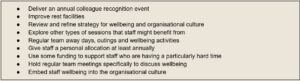
Conclusions
Outcomes
The feedback suggests that the wellbeing grants have enabled operational improvements and strategic plans to be put in place. We hope these will lead to longer term impact, in time. Meanwhile, morale and human connection have increased; teams function better and feel more valued; people have more of the tools and support they need to perform well.
Additionality
For some, it was clear that change came about directly because of the wellbeing grant; for others, particularly for larger organisations, wellbeing toolkits were already available, or colleague wellbeing strategies were already in place, so additional impact was less apparent.
Unintended consequences
In some cases, the wellbeing grant appeared to have compensated colleagues for less than ideal working conditions, such as a basic scarcity of time and space for individual appreciation, through to recognition events for people whose holidays were cut short due to staff shortages. Wellbeing grants should avoid normalising scarcity and sacrifice in the non-profit sector.
Grantholders’ future commitment to wellbeing
A key goal for this pilot was to encourage organisations to prioritise wellbeing from this point forward: committing to it at a strategic level and budgeting accordingly. The table above indicates that many are doing so, or intend to do so; but it is possible that for others, this activity will not be possible to sustain.
Next steps
Learning from the work above, the OCT is pleased to continue to provide wellbeing grants to new grantholders. One point of eligibility has changed following this review: wellbeing grants will now only be available to organisations with an income of less than £2m per year, in line with our wider policy of focusing on smaller organisations. The process will remain the same: no application form, but a brief survey is required once the activity is complete. We may explore new features over the coming months and will consult on these in advance.
We are aware that other funding organisations are doing excellent work on wellbeing, and we appreciate the time and input of those we’ve consulted with over the last couple of years. We are hopeful that by sharing our collective experience, wellbeing support will be normalised, enriching our sector’s people, organisations and our communities.


